A Comprehensive Guide to Things to Do in Charleston, South Carolina
Charleston has layers. It feels deep and mysterious at times. Sunny and bright at others. It encompasses shiny happy tourist destinations, as well as destinations that will gut you with the brutal history of the trans-Atlantic slave trade.
When you visit Charleston, you’ll discover that character abounds — in architecture, in culture, in people. Its historic district is bigger than Savannah’s, less fraught with boozy tourists than New Orleans. It maintains authenticity in ways that other beach towns along the coast do not. Gracious and gorgeous, it invites you to explore.


Beyond the peninsula, the tone undulates, at times rough and struggling, at times ordinary and suburban, at times quietly radiating luxury and wealth. There are wild natural spaces where you can kayak and paddleboard, boat through brackish water, watch birds and catch crabs. World class golf and bougie boutiques mingle with roadside stands selling tacos, peaches and sweetgrass baskets.
History pervades modern day in important ways. The best plantation tours go beyond gardens and interiors to explain the lives of the enslaved people who built the South (and generated the raw materials for much of the industry in the North). It becomes present, human and real when you stand in a sweltering kitchen where a woman stirred pots while her small daughter helped alongside. When you walk the humid grounds teeming with insects and imagine being knee-deep in flooded rice fields full of mud and snakes for weeks on end. When you place your fingers into the prints of an enslaved person’s, frozen in time in the bricks he or she made at Fort Sumter.


Charleston’s soul captured my imagination the very first time I visited; in the seven times I’ve been since, it’s seeped into my own soul. Its variety of moods piques my curiosity. Rich in both enchantment and tragedy, the region feels endlessly, beautifully diverse and interesting.
Visit Charleston and discover the many facets of this Southern gem. These are the highlights I’ve discovered over the years … and I’m certain I’ve barely scratched the surface.
Where to Eat in Charleston
Food is as much a part of the Charleston experience as anything. More so, some would argue. Whether it’s basic Southern classics or innovative interpretations by renowned chefs, Charleston is a culinary destination. Go beyond the cluster of tourist-populated restaurants on East Bay Street for the best high and low dining experiences.

Husk is a highly regarded restaurant on everyone’s list. But if reservations are elusive, the bar has a limited food menu and is much easier to get into. I had the best fried chicken of my life there.
Set in a hall that historically was home to a bank, the Ordinary makes you feel as if you should be wearing a day dress and carrying a handbag that matches your hat. (But no one does.) It’s a little noisy when busy, but has a lively oyster bar. Speaking of oysters: In months not ending in “R,” you won’t find (or shouldn’t find) local oysters — the warm water breeds bacteria.
The ingredients here are carefully chosen, simple and exquisite. Who knew such flavor combinations would sing so brightly? The chef, that’s who. The Grocery has a canning program, meaning local ingredients are always in season.

When people say you eat with your eyes, they usually refer to the visual appeal of a dish. But at Lowland, that applies to the surroundings. Feel as if you stepped back in time, and be treated as if you’re royalty. Don’t miss the celery salad, by the way—this particular dish by James Beard Award-winning chef Jason Stanhope has been a viral sensation.
There are plenty of cooked things on the menu here (the tacos are top-notch), but they do seafood especially well. Check out the cool vibe of the beautiful upstairs bar first, then enjoy a meal and a selection from their interesting wine list in the lively dining room with a killer alt-rock playlist.


The service, food and atmosphere were truly darling. I don’t know if this is why they call it the Darling Oyster Bar, but it is welcoming and fun. One of my favorites!
This upscale spot at Patriot Point near the USS Yorktown aircraft carrier museum provides a breathtaking view of sunset over the harbor.

Bowens is a ways from downtown — almost to Folly Island — but worth the trip (and you might love visiting Folly Beach anyway). Most of the food is fried nearly to death and served with a side of history — it’s in the book 1,000 Places to See Before You Die. You can also get all-you-can-eat oysters downstairs most months of the year (months ending in “R,” of course). The line can get long around sunset, so plan accordingly.
It’s tiny but mighty. During high season, it’ll be hard to get a table, so make reservations or look for a bar stool. This Sullivan’s Island lovely has been nominated twice for a James Beard Award and won Wine Spectator’s Award of Excellence. This means that you can get high-end food, and you can get a killer pizza.


Just outside of Charleston proper in the West Ashley neighborhood, CudaCo slips under the radar. But if you like seafood at all, it’s a must. This tiny shop sells food fresh off the boat; you can take it home and prepare it there, or you can ask the staff to cook it for you to enjoy on the spot. There are picnic tables out back overlooking a tidal creek; go at sunset and pinch yourself, because the food and scenery are that good.
Still on My List
I couldn’t possibly include my full list here of places I’ve yet to try, but tops are Leon’s Fine Poultry and Oyster Shop, and both Rodney Scott’s BBQ and Lewis Barbecue (love me some barbecue). I can’t tell whether Camellias at the Hotel Bennett is an event, architecture or dining, but I plan to go for their standard service just to see the inside. I’m also hoping to visit High Cotton for some live music, and a cooking class at the Restaurant at Zero George might be a date night one day soon. Other notables: apps and drinks at the eighth-floor Citrus Club, Stay tuned — I’ll report back.
Note: If you’re interested in preserving local wildlife, tread carefully with she crab soup. Female crabs bearing eggs (roe) are not supposed to be harvested — it can put the crab population at risk. But violations occur. And traditional she crab soup recipes call for the roe. There are so many other low-country specialties that it’s not hard to avoid this one.
What to Do and See in Charleston
History and Architecture
The stories of wealthy and enslaved people are braided together in the tapestry of Charleston. You don’t have one without the other, and the best landmarks reflect both sides of the coin. Feel free to be awestruck by the beauty; you’re sure to have your heart broken at the same time.
For a brutally eye-opening and vital look at our nation’s history, start here. This was the site where people were bought and sold in our country in the 1800s, complete with a “slave pen.” (The bulk of the information here is about the inter-state slave trade, vs. the transatlantic slave trade, which is covered more thoroughly in the International African American Museum.) Everyone should visit, because the sins of the past would deter most people from repeating them. It’s not large, but it punches well above its weight.

International African American Museum
This new and engaging resource sits on the site at Gadsden’s Wharf where captured people disembarked to be sold as slaves. It’s bigger and contains far more artifacts and interactive resources than the Old Slave Mart, so it’s better for little learners. It also continues the learning with exhibits on the amazing strides descendants have made since being freed. Personally, however, for the intensity of the enslaved person’s experience, I prefer the Old Slave Mart Museum.

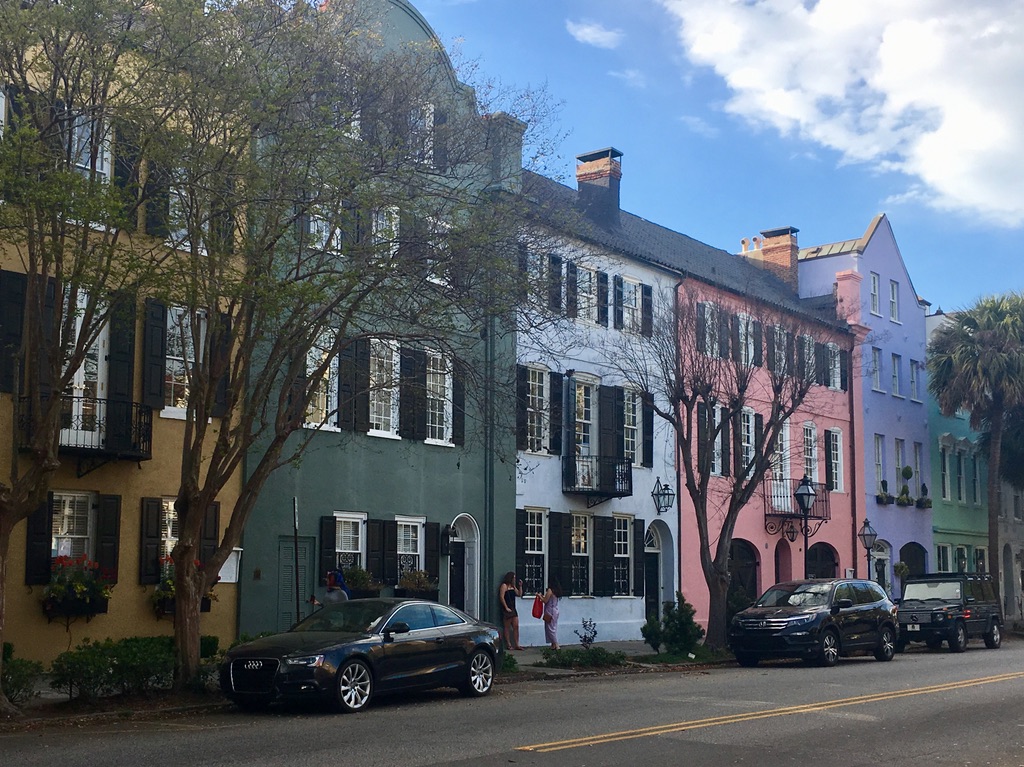
It’s the iconic image of Charleston—the colorful historic townhouses built in the 1700s. In 1931, the National Park Service designated Rainbow Row a historic landmark. After a stroll along this famous street, go up to Waterfront Park, where a giant pineapple water fountain will greet you. Snap a few photos and then continue walking down toward the water where the Ashley and Cooper Rivers meet; on a clear night, you can see the stars over the Ravenel Bridge.

You can walk across! It’s an interesting way to see the river and its traffic from another perspective. If you go at dusk, you can enjoy the twinkling city lights as the sun sets (though I wouldn’t recommend doing so alone after dark).
The Ashley and Cooper rivers that shape the Charleston peninsula meet here and flow out to sea. The site of a defensive seawall and stone fortification, the Battery and adjacent White Point Garden provide a vantage point for the historical sites such as Fort Sumter on the horizon and directly under foot. (Stones from an early seawall built in the late 1700s run along the sidewalk to the east.) See the Battery by day, of course. But if you can, go back at night, especially if there’s a full moon and it’s clear.

Stroll north along the east side of the Charleston peninsula from the Battery and you’ll come to Waterfront Park (just north and east of Rainbow Row). This stunning, shady walkway with views of Charleston Harbor to the east and glimpses of gorgeous homes to the west leads to the famous Pineapple Fountain. The city has embraced the pineapple as the symbol of hospitality, and the fountain is truly a gathering point for visitors.

The site where the Civil War began. We were there for the flag ceremony, which was surprisingly moving. I was most touched, however, by learning that enslaved people often “signed” the bricks they made by pressing their fingerprints into the clay. After seeing the first, I was obsessed with finding more fingerprints and placing my own fingertips over them. It made me cry.

Just north of the downtown area, this was an impactful self-guided tour. The property is preserved in an “as-found” state, meaning the way the home was left when the Aiken family sold it to The Charleston Museum after 142 years of ownership. There’s a heartbreaking story about a little girl in the kitchen. Actually, many of the stories are overwhelmingly sad, with threads of fortitude and courage running through. I particularly remember the enslaved people’s quarters, how tight and hot they were, and imagined treading up the stairs behind the people who lived there.
Historic Charleston City Market
Beyond the excellent local shopping, check out the history explained in signage. This is an easy way to find sweetgrass baskets—there may be a woman weaving them at the entrance. Grab a snack or assortment from Callie’s Hot Little Biscuit while you’re there. (Don’t miss the pimento cheese, a Southern classic.)
Preservation Society of Charleston
Want to get your shopping fix and take home a special find? The Preservation Society of Charleston offers unique, locally made goods, from bags to bow ties, books to cutting boards to jewelry and gourmet goods.

Cemeteries are fascinating vignettes and short stories of individuals and families, etched in stone and wrapped in delicate detailing. This one, the final resting place of a long list of very important people, maintains an eerie atmosphere as well.
The Old City Jail no longer has free daytime tours, but if you’re interested in a nighttime ghost tour, then Bulldog Tours does a nice job, including a solid historical thread through the stories.
Gullah Tour with Alphonso Brown
Mr. Brown is highly entertaining, though motivated to sell his book. It was a bit difficult to understand him sometimes, due in part to his accent but also on account of the poor mic system. His history of certain neighborhoods was enlightening—stories we had not heard anywhere else.


The Churches
Charleston is known as the Holy City because of the many steeples that mark its skyline. St. Philip’s, founded in 1680, is one of the most notable spires, and St. Michael’s is one of the oldest church edifices in Charleston. Mother Emanuel has been battling racism since its founding in the 1800s, and endured tragedy in June 2015 when a white supremacist opened fire after joining Bible study, killing nine. I attended a service at Mother Emanuel, where I was one of three white people and seemingly few visitors. I relished the warm welcome and absolute joy; I only wished I’d brought some water as the service was several hours long.

We didn’t allow nearly enough time to explore this massive floating museum. Even though I’m not one for military history, this aircraft carrier moored in Charleston Harbor off of Mount Pleasant really conveyed the sense that boys were sent away to experience horrific things. It also helped me piece together a chunk of world history that I never fully understood. Note: I’ve been on two ships since, at Pearl Harbor and in San Diego, and both helped explain that same period a little better than the exhibits here.
Parking is tricky in downtown Charleston! If you’re staying downtown, or you want to park in a garage and get around more quickly than on foot, the Dash (Downtown Area Shuttle) is free and easy.


Still on My List
The Nathaniel Russell House: A National Historic Landmark restored to its 1808 visage thanks to cutting-edge technology, the home is best known for its free-floating staircase. Mr. Russell was known as “a successful merchant and trader of captive Africans,” a LinkedIn kind of description that makes my skin crawl. As the Historic Charleston Foundation is known to do, they of course invite you to visit the quarters of the enslaved people who kept this house and its occupants.
The Gibbes Museum of Art: The historic structure looks as beautiful as the works inside.
The South Carolina Aquarium: Right on the shore, this building is a modern marvel. I’m most interested in the sea turtle recovery exhibit, which also rehabilitates sick and injured sea turtles.
Two Sisters Tours: I’ve taken my fair share of guided and self-guided walking tours of Charleston, but I’ve yet to meet Mary Helen Dantzler and Therese Smythe. They sound like true genteel ladies, and their family has been in Charleston for seven generations. You can be sure that when my extended family visits, we’ll be booking with them.
The Charleston Museum: Founded in 1773, it’s billed as America’s First Museum. The Charleston Museum spotlights the region’s history and people right through today. It also includes two historic homes, making this a trifecta perfect for rainy or sweltering days.
Charleston Water Taxi: This is a cheap way to take a boat ride around the bay! It also serves as public transportation between the Charleston peninsula and Mount Pleasant.
Other notables: A tour at High Wire Distilling,
The Plantations
The word “plantation” is so loaded. I wasn’t sure how I’d feel about visiting one. (And I always knew I wouldn’t want to live in a neighborhood or on a street with “plantation” in the name.) So I love this quote from the McLeod Hall website, which could be said of all our plantation experiences: “McLeod Plantation Historic Site is not just a place for memorialization and a place of conscience, but a place where the transformation of conscience can occur.”


I had no idea what to expect when we visited our first, but this was an excellent choice. We began with the “From Slavery to Freedom” tour, an eyes-wide-open and frank discussion of the lives of the enslaved people who toiled and suffered on the grounds, as well as a visit to their remaining cabins. It was so engrossing and moving that we never toured the inside of the house. We did, however, enjoy the stunning gardens that were in full bloom when we first visited in March. Buy tickets in advance and plan for a full day.
This is a big plantation and a National Historic Landmark. Stop outside and say hello to the flock of sheep at the entrance, then map out your day to hit all the highlights and cover all the grounds. Be sure to include the Beyond the Fields tour for the perspective of the enslaved people who lived here. When you go online to buy tickets, spend some time getting to know the background of the family on the website as well.

Most of the plantations open today are situated southwest of downtown Charleston; Boone Hall is northeast in Mount Pleasant. The signature here is the drive lined by live oaks — it’s exactly what you imagine when you envision a plantation. Boone Hall is still a working farm (you can take a tractor tour of the grounds), and scenes from The Notebook were filmed here. Most impactful for me was the Gullah Culture presentation: I still get chills remembering the woman who explained how spirituals were calls and messages and then belted them out for us. Note: Map apps might take you through a field and to a back entrance. Use the directions on the website instead.
Still on My List
Rounding out the big five in Charleston are Drayton Hall and McLeod Plantation Historical Site, the latter managed by Charleston County Parks.
The Great Outdoors
You can’t miss the beaches in South Carolina — they’re wild and wonderful. But don’t overlook the marshes. In fact, you may find yourself as smitten as I with the hidden life that oozes, pops, flies, flops and creeps in and out of the pluff mud and the Spartina grasses with the tides.

This wealthy enclave is nestled on the Atlantic just a short drive from downtown Charleston, with views across the harbor and out to sea.
- The beach feels quiet, wild and wonderful—a very different vibe than Folly Beach, which is ice cream and kites and kids.
- Stroll the neighborhood to see the Charleston Light, as well as the Bench By the Side of the Road, an initiative by Nobel Prize-winning writer Toni Morrison commemorating the “pest houses” where enslaved passengers who arrived carrying infectious diseases were quarantined during the 1700s.
- Have dinner at The Obstinate Daughter, listed above, at Sullivan’s Fish Camp, or at Poe’s Tavern, an homage to Edgar Allen Poe, who was stationed at Fort Moultrie in 1827–1828 and wrote the island into several of his works.
Centuries old, with a trunk circumference of 28 feet, this remarkable tree is a great stop when you’re on your way somewhere else in the area (maybe Folly Beach, below). It’s one of the best examples of the Southern live oaks in the area, with a bit of education on the side. I hugged it, of course. Kissed it too.


So fun! Folly is a quintessential beach town, lively and bright, especially when the weather is hot. Stop by the Angel Oak Tree (above) on your way there.
- Go for the boogie boarding, beach strolling and people watching.
- Browse for trinkets in the town souvenir shops
- You can get ice cream and cocktails at the beach, but for a meal, we like Rita’s. It’s good bar food, and they sometimes have live music on the patio.
- Or for a sunset kinda day, head to Bowens (above) with ample time to queue up.


We experienced the company’s excellent programming from their outpost in Kiawah River, where we booked one of their guided kayaking trips and one of their boat tours, then rented a kayak for our own morning out. The guides are exceptionally well-informed about the plant and animal life in the area, full of all kinds of fascinating fun facts. The staff in the shop is great as well, and the super-cute selection of goods there supports the Coastal Expeditions Foundation, funding loggerhead sea turtle nest protection and providing free environmental education to South Carolina students. We saw so, so many very cool birds and other creatures close up, including dolphins and alligators!
I haven’t seen it yet, but dolphins strand feed here. It’s a rare thing to witness, dependent on the tide and time of year. If you’re so lucky, be respectful of these amazing creatures.
- If you need provisions while in the area, stop by Freshfields Village. It’s a cute, bougie shopping center with a great little grocery store.
- If you’re a golfer or a fan of windswept vistas, drive out on Kiawah Island for lunch or a cocktail at the Ryder Cup Bar at the Ocean Course.

We keep trying to understand why this place is so popular. The food at the place we finally settled on was really bad; the stereo kept playing the same song over and over again loudly; and everything stuck to the sticky table. Parking was difficult. I sound super judgy. But it seems like a marketing success — perhaps we need to give it another chance.
Still on My List
Center for Birds of Prey: We’re all bird nerds, but we also have a Certified Master Birder in our family, so this is a must. I’m also deeply curious about the South Carolina Oiled Bird Treatment Facility and the Avian Medical Clinic.
Charleston Tea Garden: They actually grow tea here for Bigalow.
A First-Timer’s Guide to Charleston (But You’ll Be Back)
There’s a reason we’ve returned to Charleston so often that our family decided to purchase a vacation home there. The list of things to see and do (and places to eat) is nearly endless. Even more compelling is the enchanting culture and enduring grace of the Holy City.
So pour yourself an iced tea. Turn up some 803Fresh. (Maybe even get a fan from a black-owned business.) And prepare to explore the wilds of the marshes and the layers of history in this beautiful region — as the Gullah saying goes, you might could decide to visit more than once.